
The Inner World of a Designer: Where Creativity Meets Thought
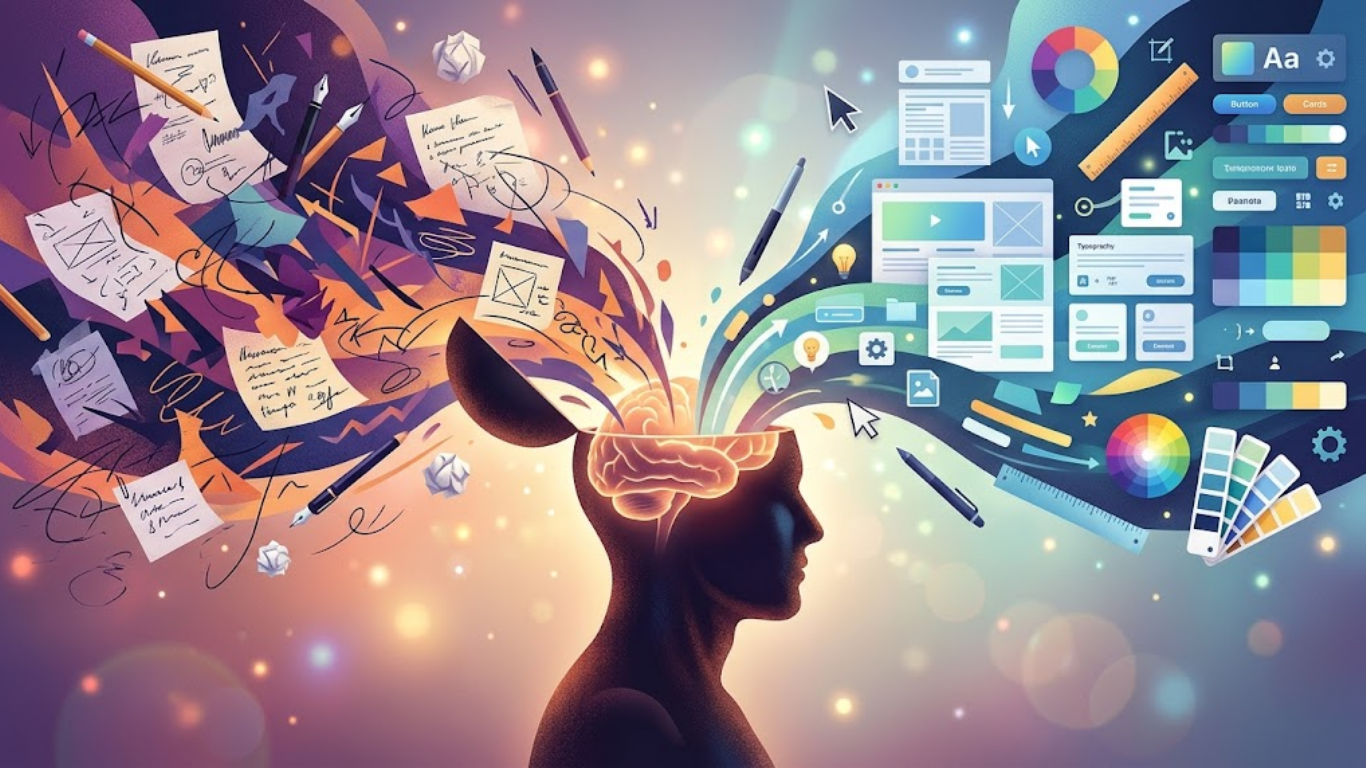
Looking at the work of a designer, people tend to see the ultimate result, a well-designed logo, a clean interface, and the visual appealing layout. What they fail to realize is the process behind it that takes place: the thoughts, feelings, struggles, and choices that influence each pixel. The real work of a designer commences way before it shows up on the screen. This begins in the mind.
The inner world is always charged and is at the center of every designer. This is a world of curiosity, observation, imagination, and problem-solving. Designers do not merely look and observe things as they appear, but as they might appear. The simplest thing, a color mix, a random talk, can initiate an idea flow. This is what allows design to be powerful: the ability to make things that seem unrelated and remodel them into something significant.
Creativity is not a simple process, however. The mind of a designer is inclined to oscillation of clarity and disorientation. It does come with times of inspiration when the ideas are running like a stream and times of doubt when everything appears not to work. Such an emotional make and fall is an inseparable component of the creative process. Indeed, some of the best ideas are conceived years after struggle. It is in these struggles that designers know how to think more and seek out alternative solutions, and how to stretch themselves.
Empathy is another significant element of the inner activity of a designer. Good design is not only an issue of beauty, but it is also an issue of knowing people. Designers always attempt to enter into the mind of the user, how they think, feel, and what they need. This necessitates awareness and sensitivity. A designer needs to inquire such questions as: Will it be easy to use? Is this clearly communicated? Would this be the correct feeling? These in-house questions will inform the process of decision-making and make sure that the design has a purpose.
Concurrently, designers need to juggle between creativity and rationality. Whereas ideas are inspired by imagination, they are guided by structure. Designers usually strive to constrain themselves: they have to meet client demands, technical and production restrictions, deadlines, and brand specifications. These constraints are creative instead of stifling it. They compel the designers to be strategic and come up with innovative solutions that are creative and sensible. It is this freedom and constraint that make up strong thinking in design.
The other important component of the design mindset is self-reflection. Designers always judge their work. They challenge their decisions, perfect their thoughts, and seek improvement. This self-giving loop assists them in developing over time. It may, however, result in overthinking too. Perfectionists are many designers who cannot be satisfied with their work, claiming that it is not good enough. Recognizing the art of progress and not perfection is a great route toward becoming a confident person.
Besides personal thoughts, external communication is also a key factor. Designers should learn to leave feedback without being personal about it. Design, being a creative and expressive area, may at times be interpreted as a criticism of skills. Nevertheless, in an actual sense, it is a chance to improve. A good designer necessarily learns how to dissociate themselves with their own work and apply feedback as a motivational means to improve.
Continuous learning also has a profound influence on the minds of designers. Trends shift, tools fluctuate, and expectations of users move. In order to be relevant, designers need to always be curious and receptive to new things. This implies experimenting with new tools, on different styles, and learning about other designers. Anything can be inspirational, such as nature, technology, art, or even ordinary life. The greater the designer can observe and learn, the more he or she enriches his or her creative thinking.
The internal process also includes time management and focus. Designers should not be disciplined, and they need to be creative. Time management, planning, and being consistent are part of the crucial steps to turning ideas into reality. A proper workflow will lead to less stress and enable designers to concentrate more on creativity than on the mess.
Nevertheless, the profession of a designer is very gratifying in spite of all the hardships. A special pleasure is in bringing an abstract notion into reality. Be it a logo as a symbol of a brand or a user interface as a way to make a user experience better, design can influence the lives of people in the most subtle, yet significant ways.
Finally, a designer is represented as a reflection of his inner world. Each design bears a portion of their thought, how they feel, and what their vision is. This is an internal process that can be used to differentiate good designers and great designers. It is not an affair of mere appearance; it is a matter of thinking, feeling, and thinking design.
Design does not simply consist of what you can see. It’s how you think.